Ayurveda and yoga are two ancient traditional systems in India to keep us healthy and happy. Ayurveda is a traditional system that makes the use of ayurvedic medicine (mainly plant based medicines). Yoga uses physical postures as well as breathing techniques for physical and mental health. So, Ayurveda and yoga both have a holistic approach to physical as well as mental health in their own way. They both go hand in hand — one guides us on how to live well in daily life, as well as the other shows us how to awaken our inner awareness. Ayurveda and yoga together teach and help us to live simply, eat wisely, move with awareness, as well as rest with intention. If we practice yoga with continuity, it strengthens as well as calms our mind and when we follow Ayurveda, it nurtures as well as heals our body. Ayurveda and yoga if come together, they form a circle of wholeness — a complete way to care for ourselves. Ayurveda helps us understand our unique body type, our energy balance, as well as what supports or disturbs it. Yoga helps us align our breath, thoughts, as well as actions with that balance. Ayurveda and yoga create a simple, easy as well as practical guide for everyday living. The union of these two ancient practices helps us feel light, peaceful, as well as deeply connected to who we actually are. This way, Ayurveda and yoga give a complete way of living — a holistic path for wellness that brings harmony to body, mind, and spirit.
What is the link between Ayurveda and Yoga?
We should think of ayurveda yoga as two parts of a single healing system. Yoga gives us tools to align the body as well as calm the mind. Ayurveda gives us tools and knowledge to feed the body for keeping the inner fire steady. When you put them together, you get a complete lifestyle: movement, breath, food, sleep, as well as daily habits for supporting a healthy body as well as life. When we practice ayurvedic yoga or Ayuryoga, we practice yoga postures, breathing techniques, meditation as well as sattvic foods and good fooding habits to match and fulfil our body’s needs. The idea is simple. Yoga trains attention. Ayurveda gives us the map of what we need to attend to. Together, both Ayurveda and Yoga deepen the body mind spirit connection. When practitioners breathe, move, as well as eat with awareness, your whole system starts to feel lighter and clearer.
How Yoga practice changes with Ayurveda
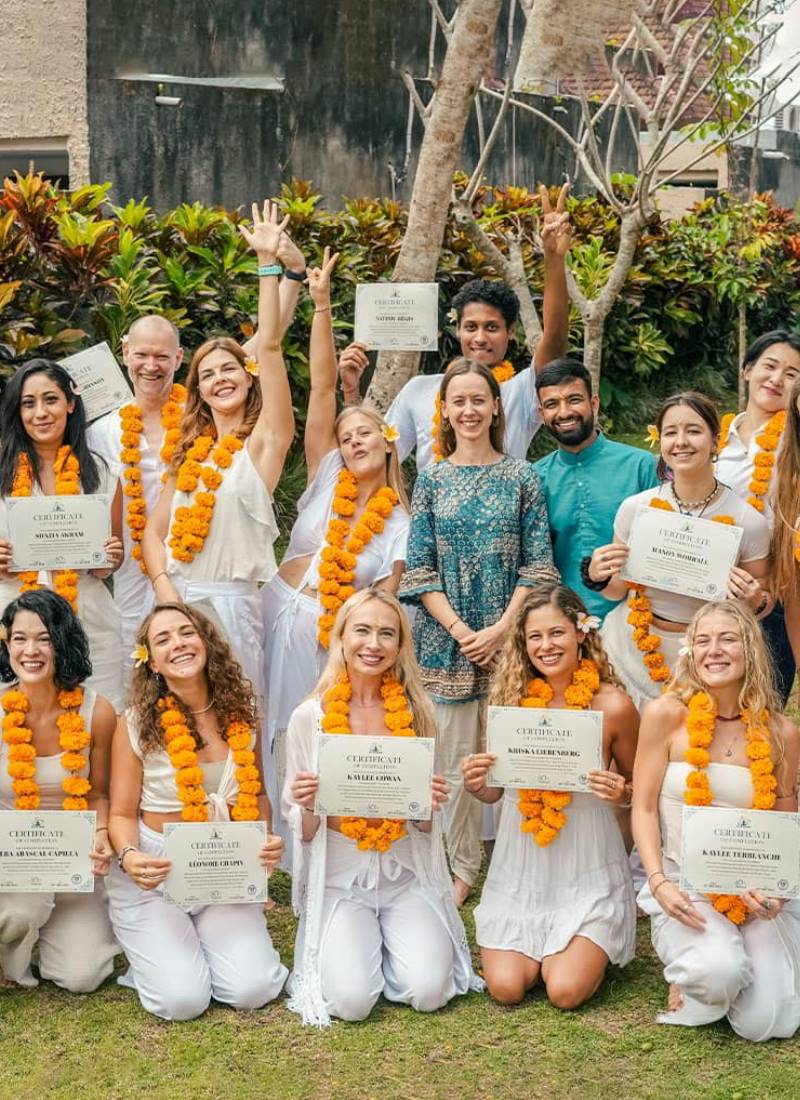
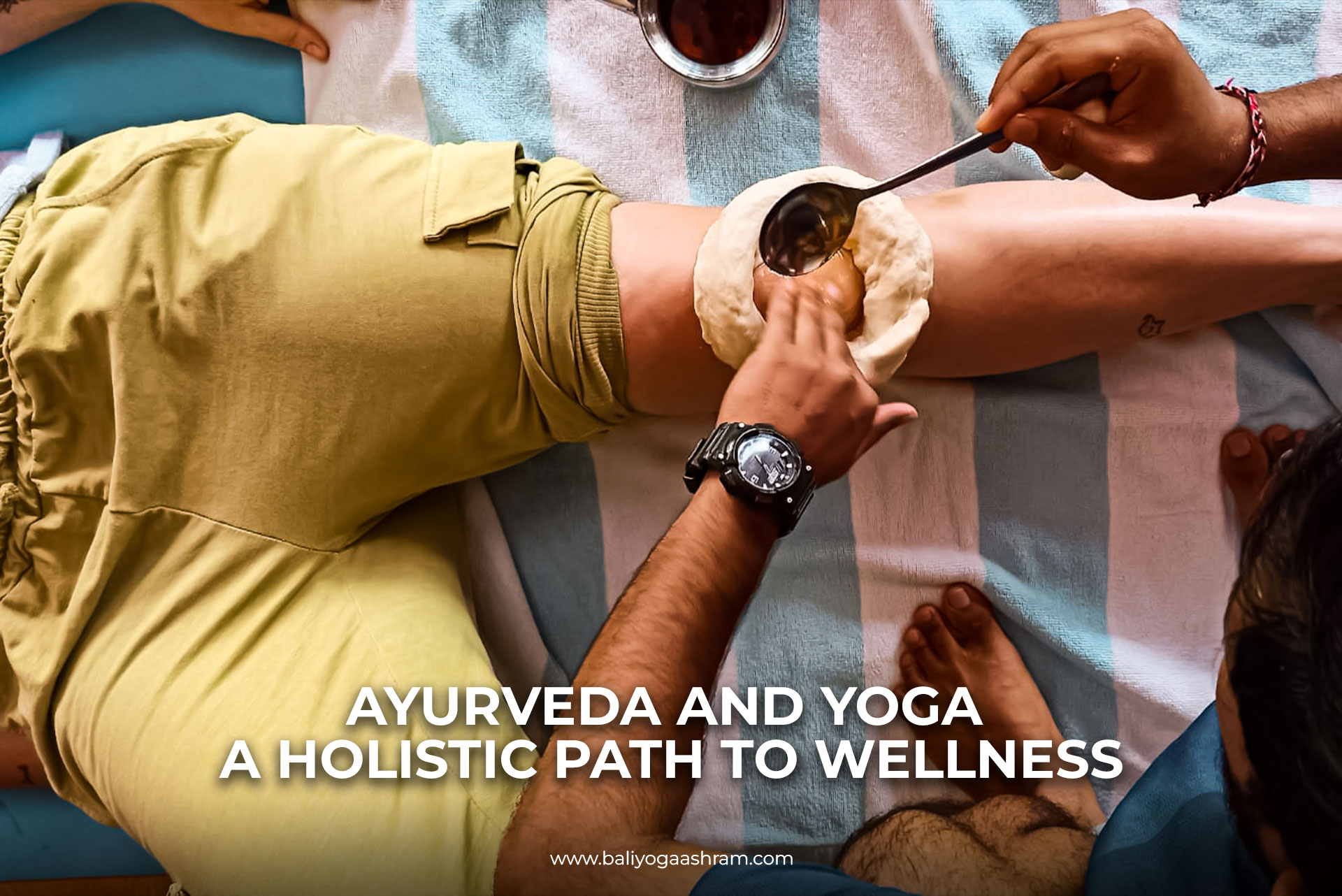
A yoga practitioner or a yoga teacher training student can notice the difference very easily if he or she practises yoga with ayurveda. When yoga practitioners or yoga teacher training students in Bali yoga ashram take the yoga teacher training in Bali, they focus on body alignment as well as their breathing techniques. However, in an ayurveda yoga session in Bali, we create a fine-tuning between Ayurveda and Yoga practice to suit the body as well as the energy levels of every practitioner. On cool mornings, a warming sequence helps while on hot afternoons, gentle and cooling practices soothe. This is the main feature of ayurvedic yoga therapy — tailoring the practice according to every person. An ayurveda yoga retreat generally mixes yoga, guided ayurveda meditation, as well as sattvic foods (meals). You may also experience an ayurveda yoga massage — slow, oil-based treatments that calm the nervous system as well as help the body release tension. These Ayurveda yoga retreats are not luxuries, rather; they are structured pauses that let your body reset.
What happens on an Ayurveda retreat in Bali?
At an ayurveda retreat Bali, everyday begins with very simple daily routines: practicing slow simple and easy movements, breathing practices, as well as warm water. You eat sattvic meals that are easy to digest as well as support digestion. You perform ayurveda meditation for short periods of time. There are talks that explain how sleep, work, as well as food affect your overall body and mind balance. Different Ayuryoga retreats include hands-on care such as ayurveda yoga massage as well as other herbal therapies. The aim of this ayurvedic treatment is to bring you back to a steady rhythm. A well-run ayurveda wellness retreat combines group practice as well as personal attention. In group classes you feel the energy of others. While, in private sessions you get guidance for your specific needs. Such a mix practice helps you in changing habit patterns as well as build new, healthy routines.
Practical ways to blend Ayurveda and yoga in the daily life of a person
You don’t need to join an ayurvedic yoga retreat to start, however, it is good to join. You can start with small steps such as:
- Every morning, practice ayurveda meditation for five minutes as well as breathe slowly and notice the body.
- Perform body movements for 10–20 minutes. Choose gentle yoga flows or sustained holds in yoga postures depending on your energy level. This is ayurveda yoga in practice.
- Eat simple, warm sattvic meals. Take cooked vegetables, grains, as well as warming spices if you feel sluggish.
- Take appropriate rest on time. Keep the rhythm of your sleep steady as it supports the holistic path for wellness.
These small actions create a strong foundation for bringing about long-term change. The body becomes more stable as well as the mind becomes clearer with the level of your practice.
Who benefits from Ayurvedic yoga?
Every practitioner or Ayurveda yoga student gets the benefits of Ayuryoga. But some people may feel the change faster:
- The people who are tired or anxious feel calm through breathing practice, gentle movement, as well as ayurveda yoga massage.
- People who are suffering from digestive issues, improve their condition by following simple sattvic foods which are easily digestible as well as timing guidelines paired with breath work.
- Anyone who wants to deepen his or her body mind spirit connection gets the benefits of these practices.
If you as a yoga practitioner or a yoga student of yoga teacher training in Bali yoga ashram are unsure where to start, an ayurveda yoga retreat or a short course of ayurygoga gives you the basics and a clear plan to continue at home.
How to choose a Ayurveda and Yoga retreat or program in Bali
- When you look for an ayurveda yoga retreat in Bali, check these points:
- Is the program led by experienced teachers who understand both systems? Look for teachers who teach ayurvedic yoga as well as ayurveda meditation.
- Does the Ayuryoga retreat provide individualized care such as ayurvedic yoga therapy or ayurvedic massage? It is necessary as personalized attention matters.
- Does the school or ashram prepare the food with care? A true ayurveda wellness retreat provides balanced, simple sattvic meals.
- Are follow-up resources provided? A good Ayurveda Yoga retreat helps its students or practitioners to keep their practices continuing after they return home.
If you are planning for a longer education, a properly structured course in ayurveda yoga or ayurveda and yoga studies will build deeper skills, especially if you want to teach or offer therapy.
Ayurveda and yoga are not rules; they are actually friendly guides. They ask simple questions such as: How do you sleep? What is your energy like? How does your digestion feel? So answer honestly as well as practice kindly. A few minutes a day of ayurveda meditation, an easy ayurveda yoga sequence, as well as occasional care such as an ayurveda yoga massage will gently move you toward developing proper balance. If you’re ready for a deeper step, an ayurveda yoga retreat or ayurveda wellness retreat at Bali Yoga Ashram can accelerate your growth. However, most of all, begin where you are. Watch how small changes bring about. In time, you will feel how this holistic path for wellness can be.
Frequently Asked Questions:
Q1. Is Ayurveda a branch of yoga?
Ayurveda is not a branch of Yoga however, Ayurveda and yoga are two branches of Vedic Indian knowledge that affect all human life as well as the whole world. They both give us a happy and healthy life.
- What is yoga according to Ayurveda?
Ayurveda gives us the knowledge for living a disease free life. When Ayurveda is combined with yoga, it becomes Ayuryoga or Ayurveda yoga that gives us the holistic path of wellness to live a long life.
Q3. What are the 5 elements of nature in yoga?
According to ancient Indian philosophy,In yoga and Ayurveda, the 5 elements are known as panchabhootam. These are five basic elements such as fire, earth, water, air as well as space/ether. These elements represent the physical as well as energetic qualities of the human body and also of the physical world.
Q4. Who is the father of Ayurveda?
According to ancient text, Charak is the father of Ayurveda as well as Ayurvedic medicine. His book “Charak Samhita” contains the description of a huge number of diseases as well as their medicines and treatment.
Q5. What are the four goals of Ayurved as well as 5 principles of yoga?
According to Ayurveda, good and optimum body and mind health is the fundamental thing for achieving the goals of everybody’s life which are Dharma (duties), Arth (finance), Kama (materialistic desires in everyone’s life), as well as Moksha (salvation). Apart from that the five principles of yoga are Yoga poses/Asana (Physical Exercise), Pranayama (Breathing techniques), Proper Diet (sattvic foods), Relaxation (Savasana), as well as Positive Thinking with Meditation (Vedanta and Dhyana).