In today’s busy world, our brains are filled with countless thoughts every day. Breathing exercise can be one of the most effective for reducing stress, while enhancing our mind to regain emotional control.
Due to deadlines, social networks, trips, home affairs, and many notifications keep our body facing stress and anxiety. So, many people are looking for ways to relax and sleep better, but they often bypass one simple but effective method that has been included in yoga practice for centuries.
Today’s neuroscience field starts to provide the explanation of what ancient yogis knew before. The recent research proves that slow breathing at the rate of six breaths per minute helps to positively affect the autonomic nervous system and to relax the body. This does not mean that slow breathing at the rate of six breaths per minute is the only effective breathing and not a treatment for illnesses, but researches prove that it may help to regulate stress, improve heart rate variability, and maintain emotional balance for most individuals.
If you have asked yourself a question of why breathing exercises are so relaxation-related or why many yoga instructors highlight the importance of slow breathing, you will find the answers in this article – The Neuroscience of Pranayama: How 6 Breaths Per Minute Calms the Nervous System.
What Is Pranayama? Know about its Meaning
The Pranayama is one of the eight limbs of yoga according to the practice of yoga in India. In the Sanskrit language, there are two words which are used in India; Prana, meaning the life force, and Ayama, meaning regulation.
It is much more than just breathing deep as it teaches individuals how they should control and monitor their breathing. Different kinds of practices of pranayama have different impacts on the human body. Some of them can raise awareness while others can help people to become more relaxed. Pranayama is very easy to learn, it doesn’t matter wherever you are, you can use your breathing to your advantage.
Why Only Six Breaths Per Minute?
Researchers are studying that five to six breaths per minute helps in the natural rhythms of the cardiovascular system. When such a speed is maintained, the breathing appears to help the brain, heart, and lungs communicate better with each other, leading to improved balance in the autonomic nervous system.
While the ideal breathing rate varies between individuals, a number of studies have shown that it can have a positive impact on heart rate variability (HRV), which is considered a measure of the body’s ability to deal with challenges. The higher the HRV, the more reliable and adaptable the nervous system is.
The many pieces of evidence produced by research give an explanation of the looming popularity of yogic slow breathing techniques among scientists and practitioners worldwide.
How Slow Breathing Calms the Nervous System?
The two main branches of the nervous system keep on working together. So, when the sympathetic nervous system activates in the body which makes the heart beat faster, muscles contract, and breathing accelerates.
The parasympathetic nervous system is called the “rest and digest” system because it restores and calms the body while helping with digestion and stabilizing emotions.
The slow and conscious breathing stimulates the parasympathetic nervous system using the vagus nerves, which decreases the low heart rate and helps relax the tensed muscles and mind as well.
This is the reason why people are first taught to do pranayama prior to meditation in order to make the nervous system and mind ready for meditation.
What Happens in the Brain During Conscious Breathing?
Current brain imaging technologies have provided new, remarkable information about the role of breathing in influencing mental capabilities.
It seems that slow breathing techniques facilitate the functioning of the brain areas. These provide concentration, emotional control, and decision-making along with reducing excessive activation in regions associated with fear and stress. It does not mean that difficult feelings will vanish immediately.
While practicing pranayama regularly helps the practitioners to face the challenges calmly and without getting over reactions. This practice also helps them to live in the present while balancing emotions and clearing their mind.
Does taking Six Breaths Per Minute Help with Anxiety and Stress?
This question is the most frequently asked question. Although the practice of pranayama should never be substituted for medical or psychological care. The studies indicate that slow breathing practices may assist in relieving stress and inducing relaxation in individuals.
People who regularly practice slow breathing may observe some of these benefits:
- Less perceived stress.
- Improved emotional control.
- Greater sleep quality.
- More focus.
- More resilience in harder situations.
- Better mental clarity and relaxation.
The benefits show businesses have to be regularly carefully applied to see significant results instead of expecting them to happen after the first session.
How Can Beginners Practice Six Breaths Per Minute Safely?
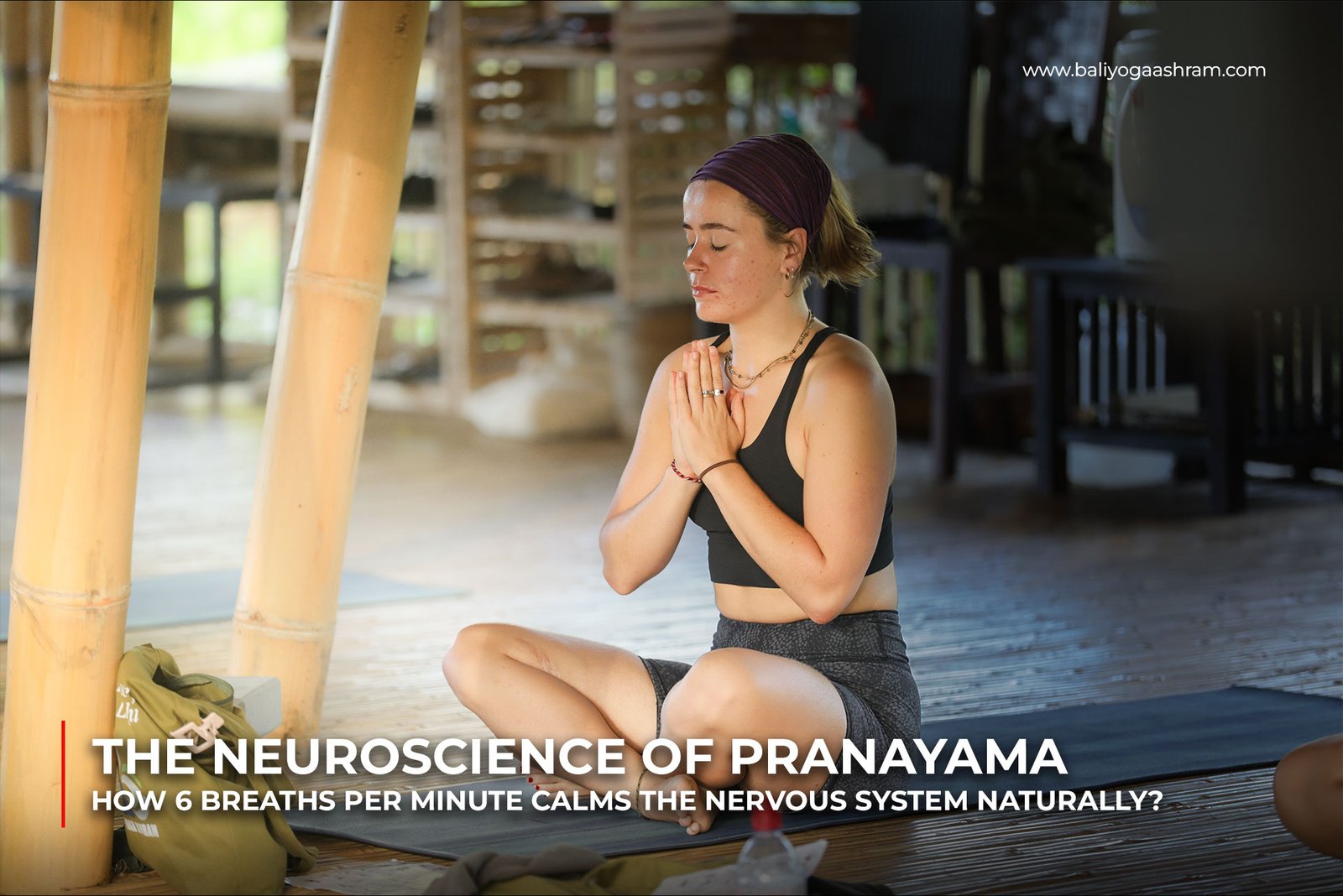
Pranayama is about breathing which doesn’t require any special equipment for practicing. But, you should do it in a quiet environment where you can sit comfortably and keep your back straight. You can soften your shoulders and keep their eyes closed to make it comfortable.
Begin with inhaling through your nose for about five seconds and exhaling through your nose for five seconds again. That means that one would complete about six breaths in a minute, but it is important to avoid any forcing or holding of the breath, as it should be done comfortably.
The practitioners’ breath should be easy and natural but if they feel any nausea, dizziness, or discomfort, they should return to normal breathing. Five to ten minutes of focused breathing can be useful for beginners in becoming a helpful practice for wellness.
Why Learn Pranayama in a Yoga Teacher Training Course?
Learning pranayama from professional instructors is beyond the simple process of breathing. A good course helps to teach the practitioners about the philosophy behind yogic breathing along with its techniques, safety aspects, sequencing, and the different approaches which help in relaxation and energization.
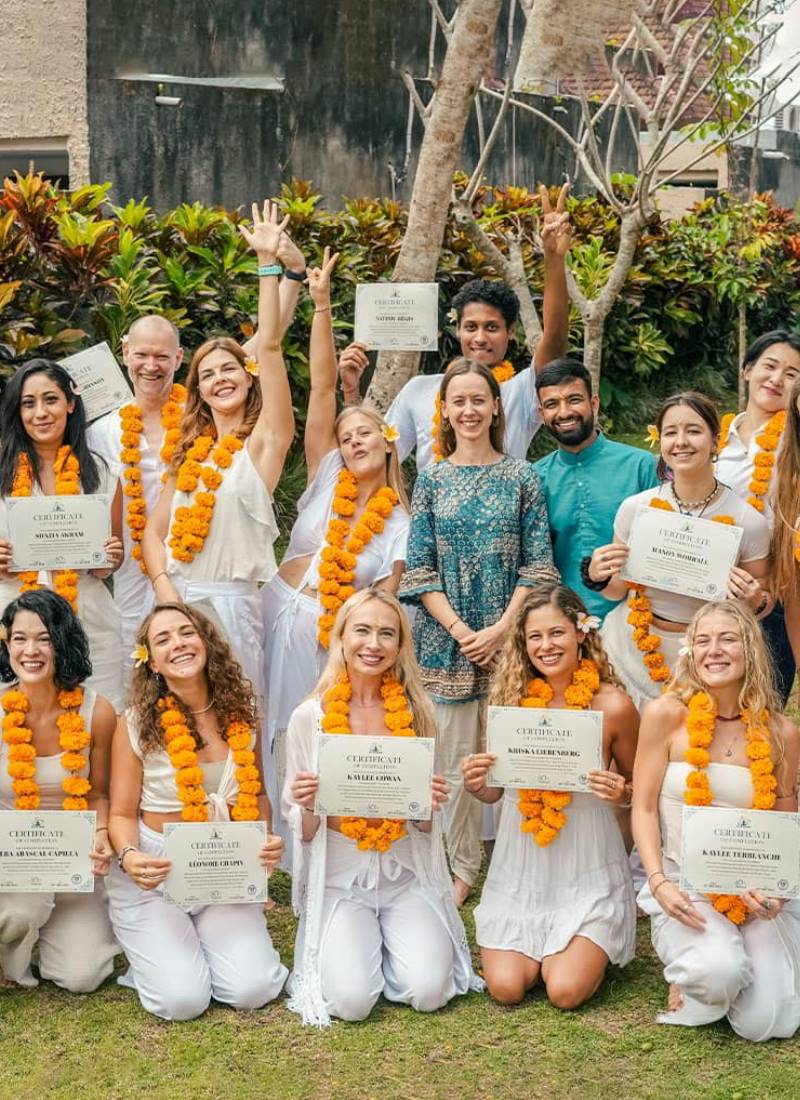
At Bali Yoga Ashram, the practitioners learn pranayama along with asanas, meditation, mindfulness, yoga philosophy, and self-awareness. Practicing in Bali, surrounded by nature, helps the learners to gain both personal experience and confidence in their teaching methods.
It doesn’t matter if your purpose of learning yoga is personal or professional, but understanding the neuroscience of pranayama will help you appreciate this ancient wisdom along with its modern scientific application.
Ancient Wisdom Meets Modern Neuroscience
Another beautiful thing about yoga is that the oldest practices get scientifically validated even today. Everybody knows that yogis believe breathing techniques affect the brain and now the field of neuroscience is exploring the reasons behind this.
While science continues to research how the process of pranayama works. It is already clear that slow and mindful breathing is very effective in achieving relaxation and emotional stability. Instead of considering ancient practices apart from modern science, it becomes evident that these two aspects are increasingly connected.
The fact that the ancient yoga practice of pranayama meets the findings of modern science allows more people to study the technique.
Conclusion
Life gives you many challenges but your response to these challenges should be different. Your every single conscious breath becomes an opportunity to pause, reflect, and restore your balance. Practicing six slow breaths per minute is not about perfection but giving your mind and body some space to heal from the daily stress.
And if you are ready to feel the powerful effect of pranayama, working with experienced teachers will help you to understand much more than just a technique. At Bali Yoga Ashram, you will explore pranayama as a method that works not only to bring you physical benefits but also help in terms of emotional, mental, and spiritual well-being.
Sometimes the greatest transformation does not start with making changes in the environment, it starts when you make decisions with a calm mind.