
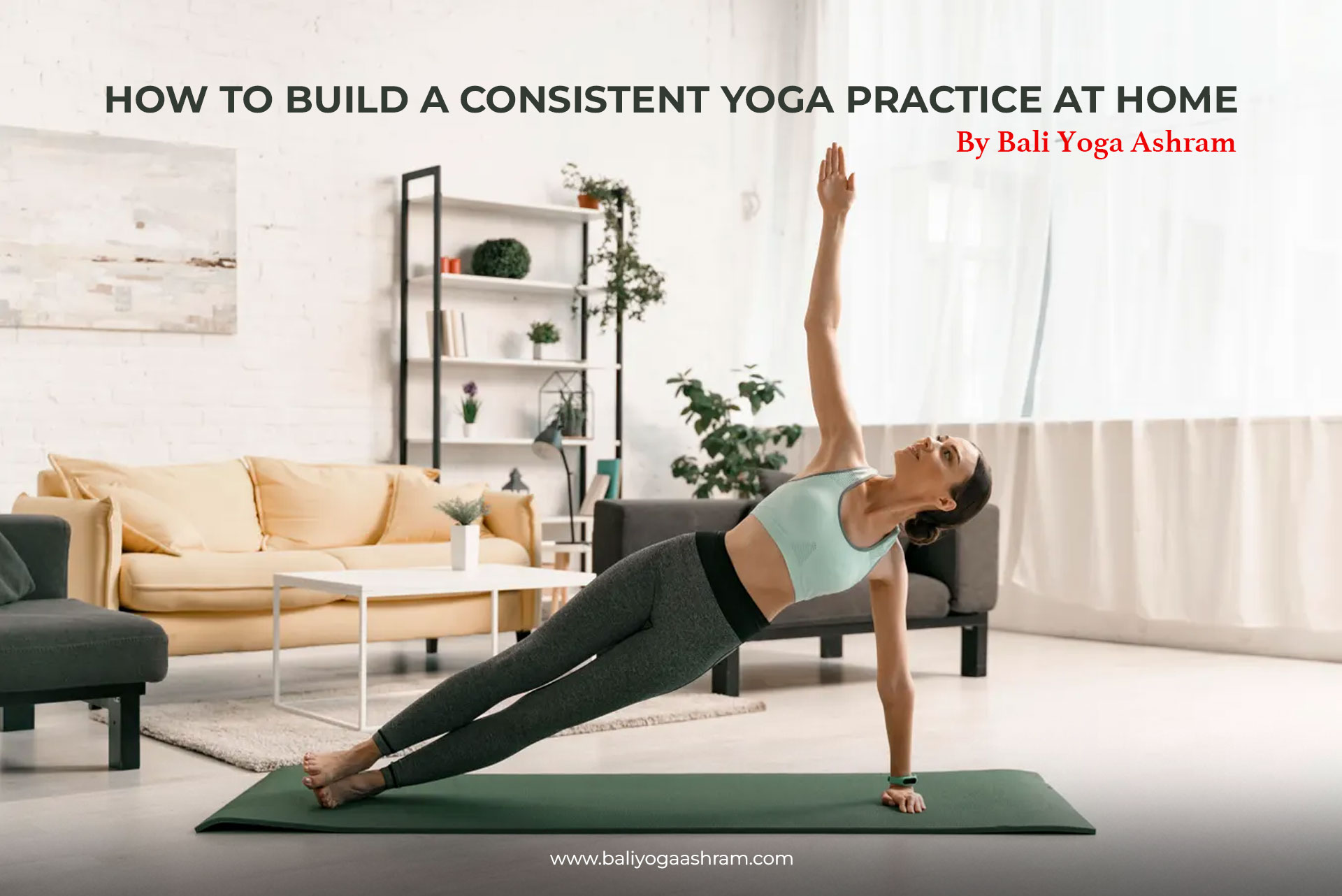
In today’s world, the idea of rolling out your mat at home and practicing yoga sounds simple, but staying consistent can also feel surprisingly challenging. Many yoga seekers begin with enthusiasm, only to lose motivation after a few days or weeks. Meanwhile, at Bali Yoga Ashram, we believe that a home yoga practice is not about perfection, flexibility, or long hours. Additionally, it is about connection, rhythm, and self-compassion.
However, building a consistent yoga practice at home is a deeply personal journey. Meanwhile, it allows the students to listen to their body, honor your emotions, and grow at your own pace. Additionally, this guide will gently walk you step by step toward creating a sustainable, joyful home practice that truly supports your life, whether you are a complete beginner or someone returning to yoga after a break.
Why Practicing Yoga at Home Is So Powerful
Practicing yoga at home gives you freedom, freedom from comparison, rigid schedules, and external pressure. Additionally, you move according to your energy, your breath, and your intention. Meanwhile, over time, this creates a stronger mind-body connection and a sense of inner discipline that flows beyond the mat.
However, home practice also builds self-trust. Therefore, when the learners choose to practice without being told what to do, yoga becomes a lifestyle rather than just an activity. Meanwhile, this is where real transformation begins, not in advanced poses, but in showing up consistently, even on quiet days.
Yoga Practice at Home for Beginners: Step-by-Step Guide
If you are new to yoga, starting at home may feel confusing. Meanwhile, the key is to keep things simple and realistic.
Additionally, begin by choosing a quiet, clean space where you feel comfortable. However, it doesn’t need to be large or fancy, just enough room for your mat and your breath. Meanwhile, you should decide on a short, manageable duration, therefore, even 10-20 minutes daily is enough to build consistency.
However, start each session by sitting quietly for a few breaths. Set an intention, such as calmness, strength, or self-care. Meanwhile, follow with gentle movements, basic asanas, simple pranayama, and a short relaxation. Additionally, over time, your body and mind will naturally ask for more.
Meanwhile, you should remember that yoga is not about doing more, it is about doing it regularly.
Can You Really Learn Yoga Properly at Home?
You can really learn yoga properly at home if the asana practices are done mindfully. Meanwhile, learning yoga at home can be deeply effective, especially when it is supported by authentic teachings, and structured guidance, along with self-awareness.
However, the beginners should focus on foundational asana practices while avoiding pushing the body into complex postures too soon. Whereas, watching their breath, moving slowly, and listening to their body is more important than copying advanced poses.
Meanwhile, many students who later join yoga teacher training courses begin their journey with a humble home practice. However, the key is consistency, curiosity, and respect for the practice.
Which is the Best Time of Day for Beginners to Practice Yoga at Home
The best time to practice yoga at home is the time which the learners can maintain consistently. Meanwhile, traditionally, early morning (Brahma Muhurta) is considered ideal because at this time the mind is calm and the body feels fresh. Additionally, morning practice helps to energise the body while setting a positive tone for the entire day.
However, everyone can not practice in the morning. Therefore, evening or late afternoon practice can help them to release stress, tension, and mental fatigue. Whereas, gentle yoga at night also supports better sleep.
Therefore, instead of searching for the “perfect” time, choose a time that fits your lifestyle. Consistency matters more than the clock.
How Long Should Beginners Practice Yoga at Home Daily?
For the yoga beginners, 15 to 30 minutes daily is a wonderful starting point. Meanwhile, this duration is long enough to experience benefits without feeling overwhelmed. Additionally, the learners can gradually extend your practice to 45 or 60 minutes as their strength, flexibility, and focus improve.
However, short daily asana practices are more effective than long and irregular yoga sessions. Additionally, a few mindful stretches or conscious breathing keeps the learner’s connection with yoga alive even on busy days. Meanwhile, consistency grows naturally when practice feels nourishing rather than exhausting.
Gentle Yoga Exercises at Home for Beginners
Gentle yoga is the foundation of a sustainable home practice. Meanwhile, postures like Cat-Cow, Child’s Pose, Seated Forward Bend, Mountain Pose, and Gentle Twists help release stiffness and improve body awareness.
However, these poses calm the nervous system and build confidence without strain. Additionally, gentle yoga also teaches beginners how to synchronize breath with movement, which is the heart of yoga practice.
Meanwhile, when practiced regularly, gentle yoga creates strength, flexibility, and emotional balance, without pressure.
Simple Yoga Exercises at Home for Flexibility & Strength
As consistency grows, the body naturally becomes ready for slightly stronger movements. Meanwhile, simple standing poses such as Warrior I, Warrior II, Triangle Pose, and Chair Pose helps the learners to build strength and stability.
Additionally, the practitioners can improve flexibility through poses such as Downward-Facing Dog, Butterfly Pose, and Low Lunges. However, practicing these mindfully increases mobility while protecting joints and muscles. Therefore, the learners always remember that flexibility is not forced, it is invited through patience and breath.
Yoga Exercises at Home for Stress Relief
One of the most beautiful benefits of home yoga practice is stress relief. Meanwhile, slow yoga movements combined with deep breathing signals the nervous system to relax.
Additionally, forward bends, restorative poses, and gentle backbends help release emotional tension stored in the body. However, practices like Nadi Shodhana (alternate nostril breathing) and deep belly breathing calm anxiety and mental restlessness.
Meanwhile, even a short stress-relief practice can help to transform the practitioners’ mood and bring clarity to their day.
Common Mistakes Beginners Make When Practicing Yoga at Home
Many beginners unknowingly create obstacles by expecting fast results. Additionally, one common mistake is practicing too intensely, too soon. Meanwhile, this can lead to fatigue, injury, or loss of motivation.
However, another mistake which is done by the practitioners is inconsistency, and practicing only when motivation appears. Meanwhile, yoga grows through discipline, not just mood. Whereas, skipping relaxation or breathwork is also common, yet these elements are very important for balance.
Meanwhile, finally, comparing yourself to others, especially online can weaken confidence. Therefore, you should understand that yoga is a personal journey and your mat is the mirror.
Essential Yoga Props for Home Practice
Yoga props help to make home practice safer and more comfortable, especially for the beginners. Meanwhile, a non-slip yoga mat provides stability and confidence to the learners, whereas Yoga blocks help to support alignment and reduce strain. Additionally, a strap helps to deepen stretches gently.
However, a cushion or folded blanket also helps to support seated asana poses and relaxation. Meanwhile, yoga props are not signs of weakness but they are tools for mindful practice and longevity. Therefore, creating a small yoga corner with these essentials helps to inspire regular yoga practice.
How to Stay Motivated With Yoga Practice at Home?
As we know that motivation naturally rises and falls, but habits help to create stability. Therefore, the yoga learners should set realistic goals and celebrate small achievements to stay motivated. Meanwhile, some days, showing up is enough and making a simple routine helps the practitioners reduce mental resistance.
However, practicing at the same time daily, wearing comfortable clothes, and keeping their mat visible can make a big difference. Additionally, journaling after practice, listening to inspiring talks, or reminding yourself why the learners started yoga can also rekindle motivation. Most importantly, they should be kind to themselves because Yoga is a friend, not a task.
Creating a Sacred Space for Home Yoga Practice
Your practice space holds energy. Additionally, keeping it clean, calm, and personal supports consistency. Therefore, you may add a candle, incense, a plant, or a meaningful symbol to create a peaceful atmosphere.
Meanwhile, this space becomes a reminder, a place where you return to yourself. However, over time, simply stepping onto your mat will signal your mind to slow down and your breath to deepen. However, sacredness comes from intention, not just decoration.
Listening to Your Body: The Heart of Home Practice
At home, there is no external teacher correcting you, therefore, your body becomes your guide. Additionally, learning to listen is one of yoga’s greatest gifts.
Meanwhile, some days your body feels light and open; whereas, other days it feels heavy or tired. However, adjust your practice accordingly and rest when needed. Additionally, you can modify poses or skip what doesn’t feel right.
However, this respectful relationship with your body builds trust and prevents burnout.
From Home Practice to Yoga Teacher Training: The Next Step
Many dedicated home practitioners eventually feel called to deepen their knowledge. Additionally, a consistent home practice often plants the seed for Yoga Teacher Training.
Meanwhile, teacher training does not mean you must teach, it means you wish to understand yoga more deeply. Whereas, anatomy, philosophy, alignment, and self-inquiry helps to enrich your personal practice and life.
However, at Bali Yoga Ashram, we often see students who began alone on their mats and later stepped into training with confidence, humility, and devotion. Meanwhile, your home practice may be the beginning of something beautiful.
The Emotional Journey of Consistent Home Yoga
Yoga at home is emotional and spiritual, rather than just physical. Meanwhile, some days, practice feels uplifting. Whereas, other days, emotions surface unexpectedly. Additionally, this is a sign of healing, not a failure.
However, through regular practice, you learn to sit with discomfort, breathe through resistance, and celebrate stillness. Meanwhile, Yoga teaches patience, resilience, and self-love in the most gentle way. Whereas, over time, your mat becomes a safe place, a space where you are fully accepted, just as you are.
Final Thoughts: Make Yoga a Way of Living
Building a consistent yoga practice at home is not about discipline alone, it is about devotion to your well-being. Meanwhile, start small, stay patient, and trust the process. Additionally, yoga meets you where you are.
However, even a few minutes daily can transform your body, calm your mind, and soften your heart if practiced with sincerity. Meanwhile, let your practice evolve naturally and let it support your life, not control it.
Therefore, at Bali Yoga Ashram, we honor every step of your journey, from your first home practice to deeper yogic exploration. Meanwhile, roll out your mat, take a breath, and begin again today.